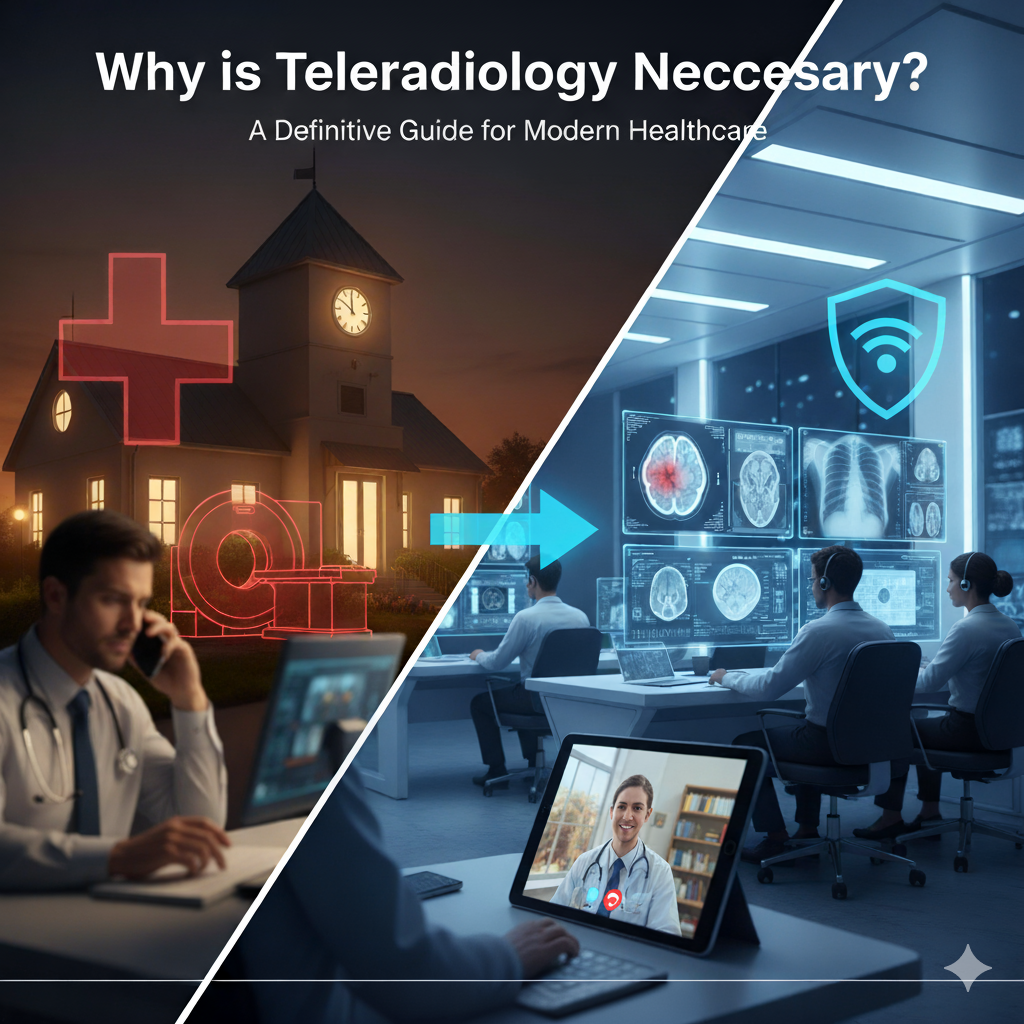
A split image showing a traditional hospital exterior with a doctor on the phone on one side, and a modern teleradiology center with professionals viewing medical scans remotely on the other. An arrow bridges the two scenes, symbolizing the connection provided by teleradiology.
Blog

Why is Teleradiology Necessary? A Definitive Guide for Modern Healthcare

A trauma patient arrives at a small rural hospital on a Friday night, the result of a serious car accident. The local emergency department is skilled and ready, but the initial CT scan suggests a potential brain bleed, a condition requiring immediate interpretation by a neuroradiology specialist. The nearest on-site radiologist is hours away, and

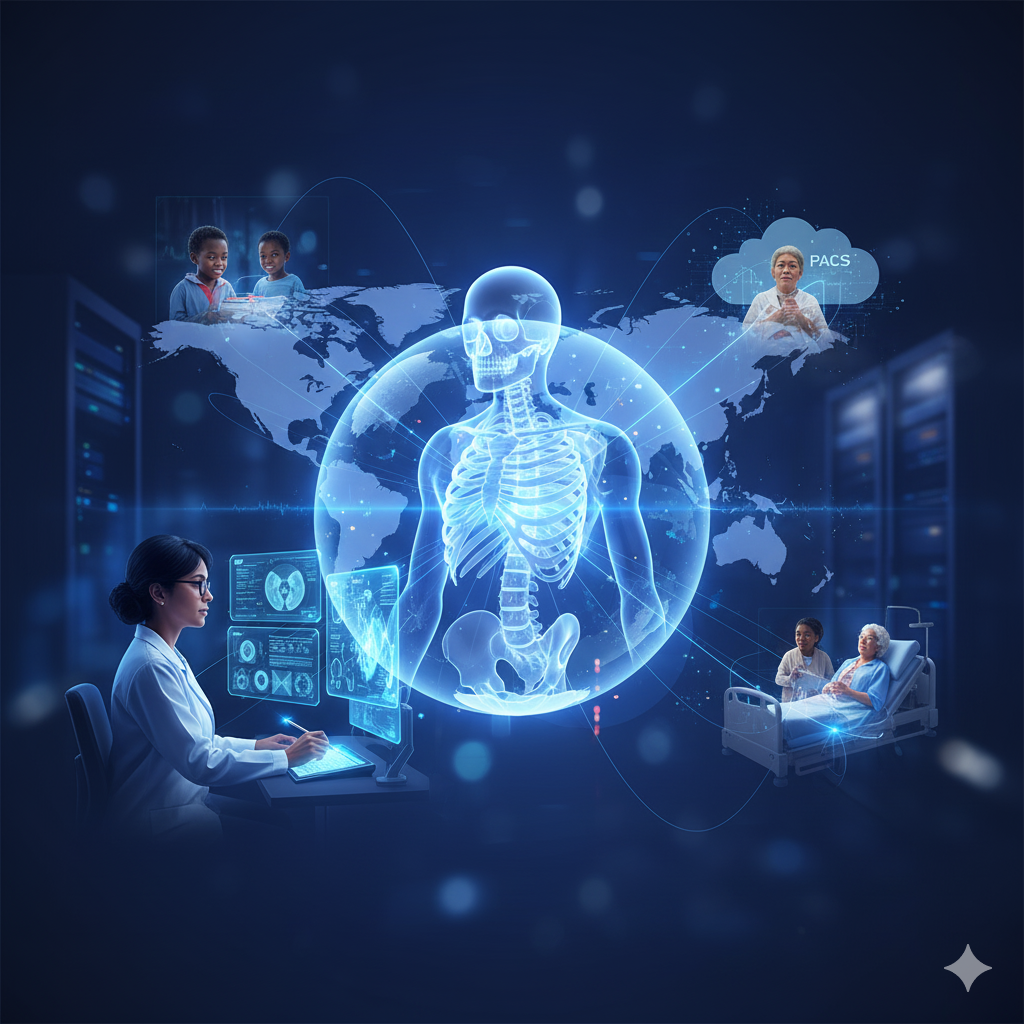
A female radiologist uses a computer with medical scans, surrounded by a glowing blue human skeleton and a world map. Interconnected lines show remote patients (children, elderly) and a hospital bed, symbolizing global teleradiology and Cloud PACS for universal healthcare.
Blog

Beyond Borders: The Global Reach of Teleradiology

In the landscape of modern healthcare, few advancements have so profoundly reshaped the delivery of diagnostic medicine as teleradiology. This practice, defined as the transmission of radiological patient images like X-rays, CT scans, and MRIs from one location to another for interpretation, is fundamentally altering the capabilities of medical institutions worldwide.1 As the most mature

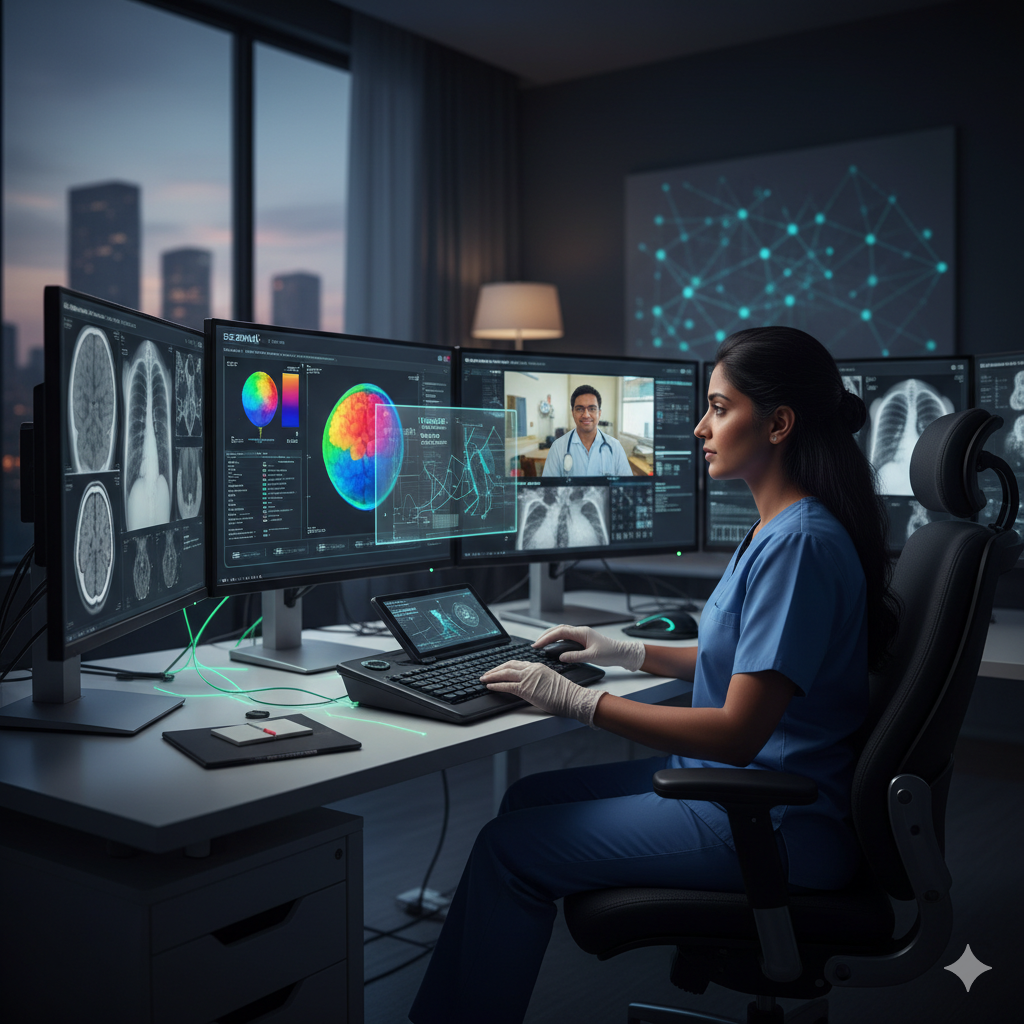
A female radiologist uses advanced teleradiology workstation with multiple screens showing CT scans, MRI images, and AI diagnostic tools for remote medical imaging consultation.
Blog

Reading the Future: Advances in Remote Radiology

Introduction: A Doctor’s Eyes, Miles Away In the world of telradiology, Picture a rural hospital in the middle of the night. A patient in the ER has been brought in following a severe car accident, and thanks to teleradiology, the doctor on call requires an urgent, expert interpretation of a CT scan to determine life-threatening

Scroll to Top